Technology meets power
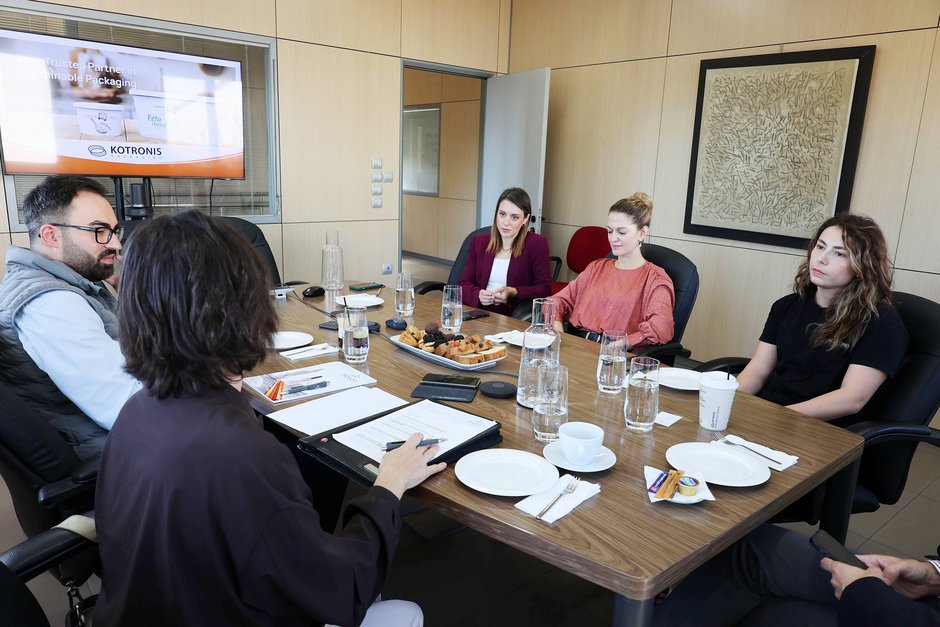
motan has been supporting Kotronis Packaging for many years as a partner in the field of peripherals. In 2024, Kotronis decided to install a highly sophisticated and modern central dosing and conveying system from motan. Augustinos Kotronis (CEO), Evi Peleki (QC Raw Material Analyst) and Ioanna Xesfiggi (Facilities Engineer) are giving an Interview to Carola Wirth (Marketing Manager of motan gmbh from Isny/Germany) and providing insights into the making of a special project and its challenges.

Carola Wirth (CW): Kotronis Packaging is one of the leading providers of food packaging in Greece with, presence abroad, as well. What sets you apart and makes you a critical player in the dairy products supply chain?
Augustinos Kotronis:
Kotronis Packaging is not just another supplier—we are a partner in our customers’ success. With over 50 years of experience, we have built a reputation for excellence that spans both Greece and international markets. What sets us apart is our ability to combine speed, innovation, and reliability. We deliver tailor-made packaging solutions that reflect each brand’s identity, meet the highest industry standards, and reach the market on time. Our state-of-the-art machinery, efficient warehousing, and deep expertise in food packaging ensure consistent quality and operational efficiency. Beyond products, we build trust through reliability, innovation, and sustainable practices, making us a pioneering and indispensable partner in the dairy supply chain.
CW: Kotronis Packaging is a company that continually evolves in automation and innovative processes. How does investing in cutting-edge technology strengthen your position as a trusted partner in the dairy and food industry?
Augustinos Kotronis:
Our ongoing investment in cutting-edge technology allows us to stay at the forefront of our industry. By implementing advanced machinery and smart production systems, we ensure high precision, efficiency, and consistency in every product. This strengthens our ability to meet the evolving needs of our partners with tailored, high-quality solutions. Ultimately, our commitment to technological advancement reinforces our reputation as a forward-thinking partner who delivers both excellence and value throughout the supply chain.
CW: Following an intensive phase of clarification and initial discussions, you once again chose to partner with us in 2024. What convinced you?
Evi Peleki:
Several decisive factors came together. First and foremost, motan’s high technological level and proven ability to deliver innovative solutions convinced us that they are the right partner to meet both current and future challenges. Beyond technology, we value the trust and reliability that have consistently characterized our cooperation, giving us the confidence that projects will be executed with professionalism and care. Equally important is motan’s deep understanding of our processes, which ensures that their solutions are not only technically advanced but also perfectly aligned with our operational requirements. Our positive experience from previous collaborations in the field of peripheral systems provided additional assurance, as we had already seen how effectively motan combines expertise, innovation, and customer focus to create tangible benefits for our business.
CW: Were there any specific criteria that the system had to fulfil?
Evi Peleki:
Yes, sure. There were several specific criteria that the system had to fulfil in order to meet our requirements. Given the production complexity, the large number of machines, and the extensive material handling involved, it was essential that the solution could manage these demands reliably and seamlessly. At the same time, precision and accuracy in material distribution were crucial to ensure consistent product quality and avoid costly errors or inefficiencies. Finally, we placed strong emphasis on efficient material handling and optimized energy use, as both factors play a decisive role in reducing operating costs and supporting our sustainability goals.
CW: You also visited a reference plant in Germany beforehand – did that help you to make your decision?
Evi Peleki:
Visiting the reference plant in Germany was crucial in making our decision. Seeing the system in real-time operation gave us valuable insights into how it performs under actual production conditions, far beyond what can be conveyed in presentations or documentation. We were able to clearly observe the practical benefits the solution delivers in terms of efficiency, reliability, and user-friendliness. In addition, witnessing real-time troubleshooting demonstrated the system’s robustness and responsiveness, giving us further confidence that it could handle potential challenges quickly and effectively within our own production environment.
CW: The motan central conveying and dosing system is a unique project in the Greek market. What specific challenges or successes have you experienced with the system?
Evi Peleki:
Implementing the motan central conveying and dosing system as a unique project in the Greek market naturally came with both challenges and successes. One of the main challenges was integrating the system into our already complex production environment, where numerous machines and processes had to be seamlessly connected. Additionally, the piping routing within the constraints of the existing building required careful planning and adaptation. Despite these hurdles, the project has delivered significant success: we have achieved a much lower labor workload, noticeable increases in productivity, and a clear reduction in downtimes. On top of that, the system has helped us minimize material waste, resulting in greater efficiency and cost savings across our operations.
CW: How did the integration of the motan system into routine production go? Were there any initial concerns from employees?
Evi Peleki:
At the beginning, there were some concerns from employees regarding the integration of the motan system, particularly about the potential increase in workload and the technical complexity of operating such an advanced solution. However, through comprehensive training and a focus on developing the skills of our personnel, these concerns were quickly addressed. The team gained confidence in handling the system and recognized its advantages in practice. Today, the system is fully integrated into our routine production processes and has significantly eased everyday working life, making operations smoother, more efficient, and less demanding for our staff.
Augustinos Kotronis:
Everything takes time. When you’re caught up in daily operations, it’s natural to have some concerns — such as how your work might be affected. The real challenge was for the technical maintenance team, as it’s a complex system that requires in-depth understanding. However, people working with material handling were already optimistic about the upcoming changes.
CW: To what extent has motan's fully automatic material distribution system METROLINK had a positive impact on the production process?
Evi Peleki:
motan's fully automatic material distribution system METROLINK has had a totally positive impact on our production process. By significantly reducing manual handling, it has not only streamlined operations and improved overall efficiency but also contributed to minimizing downtime, which directly enhances productivity. At the same time, the system has greatly improved workplace safety by eliminating many of the risks associated with manual material handling, creating a more secure and reliable working environment for our employees.
CW: How satisfied are you with the energy balance? What advantages does Kotronis gain from the energy savings?
Ioanna Xesfiggi:
We are very satisfied with the energy balance achieved through the motan system. The solution has led to noticeably more efficient energy use, ensuring that resources are optimized throughout the production process. This efficiency not only reduces overall energy consumption but also contributes to decreased machine downtime, as the system operates in a stable and reliable manner. For Kotronis, these advantages translate into lower operational costs, improved sustainability, and a smoother, more consistent production flow.
CW: How does the networking of control systems contribute to the flexibility and efficiency of your production?
Evi Peleki:
The networking of control systems is currently under discussion as the next step in further optimizing our production. What we consider particularly important is the ability to access real-time data and monitoring, which would provide immediate insights into system performance and allow for quicker decision-making. With centralized control, we expect to streamline operations even further and create a more transparent and responsive production environment. Additionally, enhanced automation in data collection will reduce manual input, minimize errors, and support continuous improvement by making reliable data readily available for analysis.
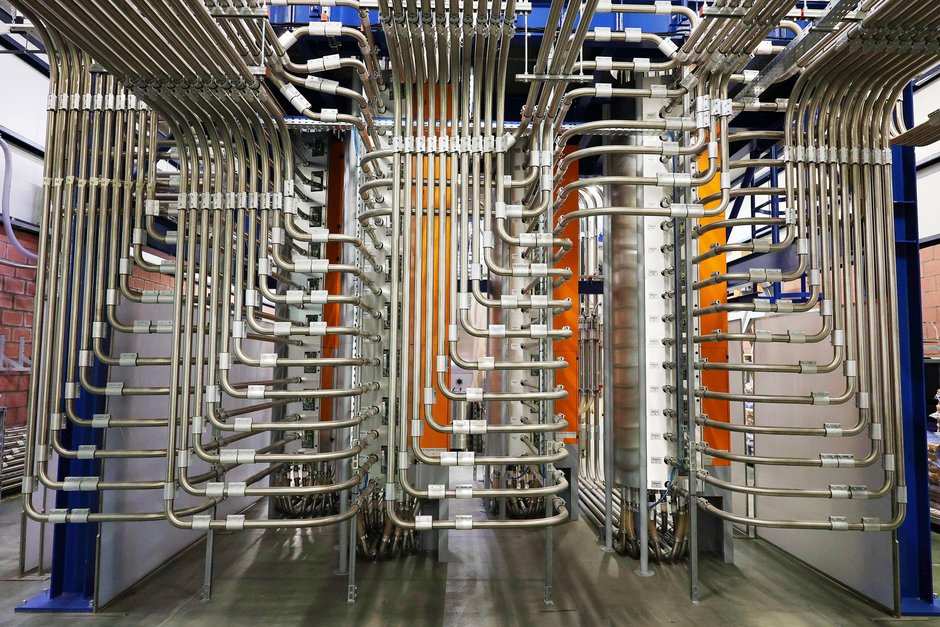
CW: Approximately 11 km of piping was installed in the production hall according to a 3D layout. Can you explain the challenges you faced and how you mastered them with the motan team?
Ioanna Xesfiggi:
Installing approximately 11 km of piping in the production hall according to a 3D layout was undoubtedly a challenging task, mainly due to the complexity of the layout and the space constraints within the existing building. Meeting strict safety standards while ensuring smooth coordination among all teams involved in the installation required precise planning and execution. At the same time, it was critical to minimize downtimes and avoid major disruptions to ongoing production. These challenges were successfully mastered thanks to the close collaboration and open communication with the motan team, who provided expert technical support at every stage. Their strict adherence to safety protocols and flexibility during installation played a key role in reducing interruptions, ensuring that the project was completed efficiently and with minimal impact on daily operations.
Augustinos Kotronis:
I believe that for projects of this scale, it’s essential to have a clear vision of the desired outcomes from the very beginning. My brother Ioannis and his team led the implementation, so it was a project of great importance to us as well. Our role was primarily to provide the necessary space and support, rather than insisting that the work be carried out by motan specifically. We understood that the faster and more efficiently the project was executed, the more beneficial it would be for everyone involved.
CW: After-sales service is also an important part of such a complex project – did it meet your expectations?
Ioanna Xesfiggi:
The after-sales service provided by motan has fully met our expectations and proved to be an essential part of this complex project. We have received continuous support, ensuring that any questions or issues are addressed promptly. The technical assistance offered by the team has been highly professional and reliable, helping us resolve challenges quickly and effectively. This ongoing support has been crucial in maintaining smooth operation of the system, allowing us to fully leverage its capabilities and ensuring consistent productivity and efficiency across our production processes.
CW: My last question to you: Were you generally satisfied with the running of the project, and would you consider recommending our services to others?
Ioanna Xesfiggi:
We are completely satisfied with the progress of the project and would not hesitate to recommend motan’s services to others. From start to finish, the team demonstrated exceptional professionalism and expertise, ensuring that every stage of the project was executed efficiently and to the highest standard. Their effective communication throughout the process made collaboration seamless and allowed any challenges to be addressed promptly. Overall, the combination of technical skill, reliability, and client-focused approach makes motan a partner we trust and are confident in recommending.
CW: Thank you very much for the interview.